Meet the 2026 - 2027 CSHS Student Committee


Aswin Jeyapandian, Chair

Portrait of Aswin Jeyapandian

I am Aswin Jeyapandian, a PhD candidate in the Department of Plant, Food, and Environmental Sciences at Dalhousie University's Faculty of Agriculture in Truro, Nova Scotia. I am supervised by Dr. Lord Abbey. I transferred from the MSc program to the PhD in September 2025 and expect to graduate in 2028.

My research turns marine waste into sustainable agricultural inputs. My current PhD project uses enzymatic hydrolysis to convert shoreline waste seaweed into biostimulants. These offer an alternative to chemical fertilizers and can help crops withstand climate-related stress. The work is part of the MBI Project and is carried out in partnership with four Indigenous communities in Newfoundland.

I am active in community and academic life at Dalhousie. I have served as CSHS Nova Scotia Student Representative, Peer Educator, Teaching Assistant, Accessibility Invigilator, and Graduate Mentor. I have taken part in science outreach for Indigenous youth, including chaperoning a 7-day Awtiket summer camp, and volunteered at farmers' markets and Dalhousie Community Days. In 2025 I received the Global Citizenship Award from Dalhousie's Student Success Centre.

Outside the lab, I enjoy bird photography and birdwatching, and I play football, badminton, and cricket. I am dedicated, competitive, and approachable. My long-term goal is to become a scientist and establish a biofertilizer research and production firm in my hometown of Tirunelveli, Tamil Nadu.


Vijitha Amalapridman, Vice-chair

Portrait of Vijitha Amalapridman

Vijitha Amalapridman is a PhD researcher in Agricultural Sciences at Dalhousie University, focusing on plant nutrition, soil health, and sustainable fertilizer technologies. She has published widely, presented at major conferences, and is a Killam Predoctoral Scholar recognized with multiple research and presentation awards. With several years of teaching experience in biosystems technology and environmental sciences, she is committed to knowledge sharing through student workshops, community outreach, and curriculum development.


Jashanpreet Kaur, Nova Scotia Representative

Portrait of Jashanpreet Kaur

My name is Jashanpreet Kaur and I am a first-year Master's student in the Department of Plant, Food and Environmental Sciences at Dalhousie University, working under the supervision of Dr. Lord Abbey. My research project focuses on evaluating the morphological, physiological, biochemical, and molecular effects of novel rhizobacteria across different growth stages of the tomato plant. The ultimate goal of my research is to explore the specific mechanisms involved in plant growth and productivity, providing sustainable, bio-based alternatives to traditional chemical fertilizers. Outside of my research and academic responsibilities, I am an avid traveler who loves exploring different cultures, trying new cuisines, and learning new languages. I also have a keen interest in fashion and enjoy testing my wits with general knowledge and trivia games!


Clay Elzinga, Nova Scotia Representative

Portrait of Clay Elzinga

Clay Elzinga is a first-year PhD student in Agricultural Sciences at Dalhousie University, co-supervised by Dr. Zoë Migicovsky and Dr. Vasantha Rupasinghe in collaboration with Dr. Beatrice Amyotte (AAFC Kentville). His research will combine strawberry population genomics, high throughput phenomics, and sensory data to explore the genetic basis of aroma. He completed his MSc in Biology at Acadia University, where he was a member of the Migicovsky Lab, and holds an undergraduate degree in biology from Brock University. Before graduate school, he gained hands-on experience in fruit research as a hazelnut field scout with OMAFRA and on the apple breeding team at the Vineland Research and Innovation Centre.

Clay's MSc research focused on the genetic basis of fruit aroma. He characterized volatile organic compound diversity across a strawberry germplasm collection using GC-MS. He also conducted a genome-wide association study of apple aroma using whole-genome sequencing, identifying genomic regions that may be associated with differences in aroma compounds.

When he’s not analyzing data, Clay enjoys spending time outdoors, biking, hiking, and camping.


Naincy Sharma, Ontario Representative

Portrait of Naincy Sharma

My name is Naincy Sharma, and I am a PhD candidate in Plant Agriculture at the University of Guelph, specializing in genetics and plant breeding. My research focuses on understanding the genetic basis of textural differences in peach and how various phytohormones influence post-harvest ripening. This work aims to support the breeding of peaches with desirable fruit quality and enhanced shelf life.

Beyond research, I served as the PhD representative for my department and as Co-Chair of the Graduate Student Liaison Committee (GSLC) for more than a year. In these roles, I represented graduate student interests, helped organize two departmental plant sales, and contributed to several student-oriented events.

During my master’s degree in genetics and molecular biology, I investigated the molecular and developmental basis of paired spikelet mutation in wheat. My academic journey has been enriched by experiences across India, France, and Canada, and I find it beautiful to see how cultures, languages and curiosity come together for the advancement of science.


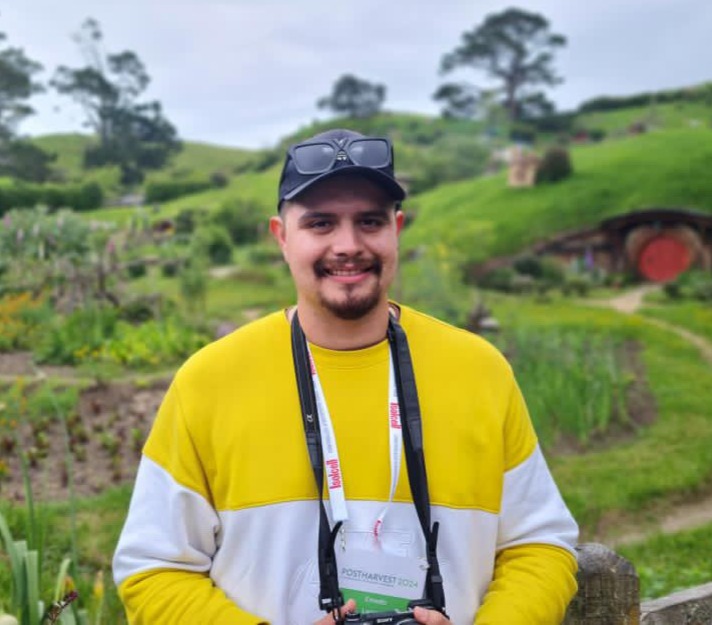
Ernesto Lagarda, Quebec Representative

Portrait of Ernesto Lagarda

Ernesto is a PhD student in Food Science at Laval University. His research is all about helping Canadian growers get the most out of Haskap (Lonicera caerulea) berries – an exciting and relatively new crop with a lot of potential. One of the biggest challenges with haskap is how quickly the berries spoil after harvest, so he's working on developing better storage strategies and exploring postharvest abiotic stress treatments to extend shelf life and preserve quality.

However, his work doesn’t stop there. He also dives into what happens before harvest, studying how the berries grow and change through different stages—looking at their physiology, chemical makeup, and even their 3D structure using imaging tools. By putting all of this together, his goal is to provide solid, science-based solutions to support local growers and encourage more people to consider haskap as a strong alternative crop.

When he's not in the lab or the field, you’ll probably find him watching sports, exploring visual arts, or just enjoying a good conversation.


Rajanarayanan Manikandan, Undergraduate Student Representative

Portrait of Rajanarayanan Manikandan

My name is Rajanarayanan Manikandan, and I am a dual degree student, completing a three-year B.Sc. (Honours) Agriculture at Tamil Nadu Agricultural University (TNAU) and continuing my studies for an additional two years at Dalhousie University as a B.Sc. Plant Science student. My academic training across these two institutions has provided a strong foundation in agronomy, crop production, and plant science, complemented by hands-on experience in soil sampling, field research, weed management, seed priming, and germination testing.

I am deeply interested in plant breeding and genetics, with a long-term goal of becoming a research scientist focused on developing sustainable, climate-resilient crop varieties. My interests lie in integrating classical breeding approaches with modern molecular tools to address emerging challenges in horticultural and agricultural systems.

As the Undergraduate Representative on the CSHS Student Committee, I aim to support student engagement, strengthen connections within the horticultural science community, and contribute to initiatives that promote research, collaboration, and professional development.


Sarah Drury, Past chair

Portrait of Sarah Drury

My name is Sarah and I am a PhD candidate at the Université de Sherbrooke. I am conducting my research in a plant virology lab at Saint-Jean-sur-Richelieu Research and Development Centre at Agriculture and Agri-Food Canada. My project is focused on the sustainable management of Botrytis, a fungal pathogen destructive to many horticultural crops. I am characterizing viruses that naturally infect Botrytis to identify ones that can reduce the pathogenicity of Botrytis. My ultimate goal is to develop a biopesticide for Botrytis using a virus that can reduce the pathogenicity of Botrytis. Please feel free to contact me if you would like to know more about my research.